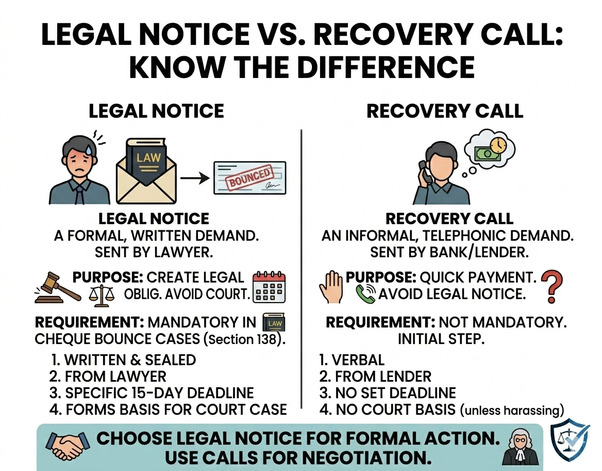
Legal Notice vs. Recovery Call: Know the Difference
Introduction
When it comes to recovering money in India—whether from unpaid invoices, loan defaults, or bounced cheques—two common approaches often come up: sending a legal notice or making a recovery call. While both aim to secure repayment, they differ significantly in legal standing, enforceability, and impact. Understanding this distinction is crucial for businesses and individuals to choose the right strategy.
What is a Legal Notice?
A legal notice is a formal written communication sent by a lawyer on behalf of a client. It serves as an official demand for payment and is often the first step before initiating legal proceedings.
- Purpose: Establishes a legal record of demand.
- Authority: Backed by law (Civil Procedure Code, Section 138 NI Act, etc.).
- Impact: Creates pressure on the debtor, as ignoring a notice can lead to court action.
- Format: Structured, signed by an advocate, and delivered via registered post or recognized digital means.
What is a Recovery Call?
A recovery call is an informal method where the creditor or their representative contacts the debtor by phone to request repayment.
- Purpose: Quick reminder or persuasion.
- Authority: No legal standing; purely persuasive.
- Impact: May prompt immediate payment but lacks enforceability.
- Format: Verbal communication, often recorded for internal tracking.
Key Differences Between Legal Notice and Recovery Call
Aspect | Legal Notice | Recovery Call |
Formality | Formal, written, lawyer‑issued | Informal, verbal |
Legal Standing | Legally enforceable | No legal enforceability |
Purpose | Establishes claim, prepares for litigation | Reminder or persuasion |
Impact | Strong pressure, risk of court case | Limited, depends on debtor’s goodwill |
Documentation | Creates legal record | Usually undocumented |
Cost | Involves lawyer fees | Minimal cost |
Which One Should You Use?
- Start with a recovery call if the debtor is cooperative and the amount is small.
- Send a legal notice if the debtor ignores calls, disputes liability, or the amount is significant.
- Best practice: Use recovery calls for initial persuasion, but escalate to a legal notice to protect your rights and build a strong case if needed.
Conclusion
While recovery calls may work as a quick reminder, they lack the legal weight of a formal notice. A legal notice not only asserts your claim but also sets the stage for court proceedings if the debtor fails to comply. For businesses and individuals, knowing when to switch from a phone call to a legal notice can make all the difference in recovering dues effectively.