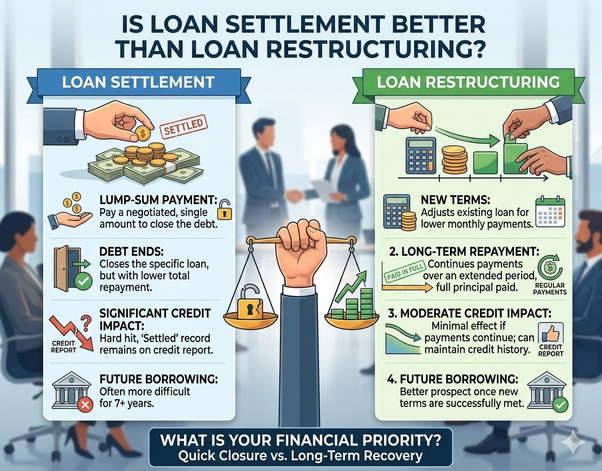
Is Loan Settlement Better Than Loan Restructuring?
Introduction
When borrowers struggle with repayment, two common solutions often come up: loan settlement and loan restructuring. Both can provide relief, but they work in very different ways and carry distinct consequences. Choosing the right option can make or break your financial future.
What is Loan Settlement?
A loan settlement happens when the bank agrees to accept a one‑time payment that is less than the outstanding dues. It is usually offered in cases of severe hardship, such as:
- Job loss or reduced income
- Medical emergencies
- Business collapse
👉 While settlement provides immediate relief, it negatively impacts your credit score because the loan is marked as “settled” rather than “closed.”
What is Loan Restructuring?
Loan restructuring modifies the terms of your loan to make repayment easier. This may include:
- Extending the loan tenure
- Reducing EMI amounts
- Adjusting interest rates
- Offering moratoriums
👉 Restructuring helps borrowers stay compliant without damaging their credit score, but it may increase the overall interest burden.
Loan Settlement vs. Loan Restructuring
Aspect | Loan Settlement | Loan Restructuring |
Definition | One‑time payment less than dues | Modification of loan terms |
Eligibility | Severe hardship cases | Borrowers with temporary cash flow issues |
Impact on Credit | Negative (loan marked as “settled”) | Neutral/positive (loan remains active) |
Relief Type | Immediate closure | Long‑term repayment ease |
Cost | Reduced payout | Higher interest over time |
Future Borrowing | Difficult due to poor credit history | Easier, as credit score remains intact |
Which Option is Better?
- Choose Settlement if repayment is impossible and you need immediate closure, knowing it will hurt your credit score.
- Choose Restructuring if you can repay over time but need relief in EMI amounts or tenure.
👉 In most cases, restructuring is better for long‑term financial health, while settlement is a last resort.
Conclusion
Loan settlement and loan restructuring are both tools for debt relief, but they serve different purposes. Settlement offers quick closure at the cost of your credit score, while restructuring preserves your financial credibility with adjusted repayment terms. Borrowers should carefully evaluate their situation before choosing—and ideally, consult legal or financial experts to avoid long‑term damage