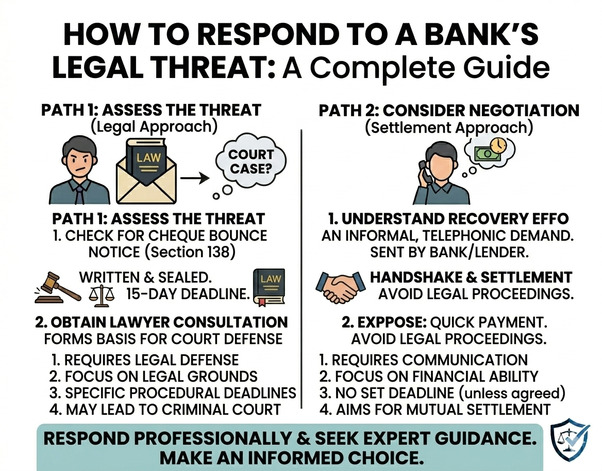
How to Respond to a Bank’s Legal Threat: A Complete Guide
Introduction
Receiving a legal notice or threat from a bank can feel overwhelming. Whether it’s about loan repayment, credit card dues, or cheque dishonour, banks often escalate matters through formal legal communication. The good news is: you have rights, remedies, and strategies to respond effectively. This guide explains how to handle such notices with confidence and clarity.
Step 1: Understand the Legal Notice
A legal notice is a formal communication sent by the bank (or its lawyer) demanding repayment or compliance. It usually outlines:
- The amount due
- The reason for default (loan, overdraft, credit card, cheque bounce)
- A timeline for repayment
- Possible legal action if ignored
👉 Tip: Read the notice carefully. Do not ignore it. Every word matters.
Step 2: Evaluate Your Position
Before responding, assess:
- Is the claim valid? Check your loan documents, repayment history, and bank statements.
- Any errors? Sometimes banks miscalculate dues or apply wrongful charges.
- Do you have proof? Keep receipts, transaction records, and communication handy.
Step 3: Draft a Proper Reply
A reply to a bank’s legal notice should be:
- Timely: Usually within 15–30 days.
- Professional: Written in clear, respectful language.
- Specific: Address each allegation point by point.
- Supported by evidence: Attach relevant documents.
👉 Best practice: Engage a lawyer to draft the reply. A well‑structured response can prevent escalation.
Step 4: Explore Settlement Options
Banks often prefer settlement over litigation. You can:
- Request restructuring of loan terms.
- Negotiate a repayment plan.
- Offer partial payment with a timeline.
- Seek waiver of penalties or interest.
Step 5: Know Your Legal Remedies
If the bank acts unfairly or harasses you:
- File a complaint with the Banking Ombudsman.
- Challenge wrongful deductions in consumer court.
- Seek injunctions against unlawful recovery practices.
Risks of Ignoring a Bank’s Legal Threat
- Court summons and litigation.
- Attachment of property or assets.
- Damage to credit score.
- Additional costs (lawyer fees, penalties).
FAQs
Q1. Can I ignore a bank’s legal notice?
No. Ignoring can lead to immediate litigation.
Q2. Do I need a lawyer to reply?
Yes, it’s strongly advised. A lawyer ensures your reply is legally sound.
Q3. Can banks harass me with recovery calls?
Banks must follow RBI guidelines. Harassment can be challenged legally.
Conclusion
Responding to a bank’s legal threat requires calm, clarity, and timely action. A well‑drafted reply, backed by evidence and legal advice, can protect your rights and even resolve disputes without court intervention. Remember: the key is not to panic, but to act strategically.