Section 138 of the Negotiable Instruments Act, 1881: Cheque Bounce Law Explained
Introduction
Cheques have long been a trusted instrument in India’s financial system. But when a cheque bounces, it not only causes financial loss but also erodes trust in business transactions. To address this issue, Section 138 of the Negotiable Instruments Act, 1881 was introduced, making cheque dishonour a criminal offence. This provision ensures accountability and strengthens confidence in commercial dealings.
What is Section 138?
Section 138 deals with the dishonour of cheques due to insufficient funds or other reasons. If a cheque is issued to discharge a legally enforceable debt or liability and is dishonoured, the drawer can face criminal liability.
Key Ingredients of Section 138
For prosecution under Section 138, the following conditions must be met:
- Legally enforceable debt or liability: The cheque must be issued against a genuine debt or obligation.
- Presentation within validity: The cheque must be presented within 3 months (or its validity period).
- Dishonour due to insufficient funds: The bank must return the cheque unpaid.
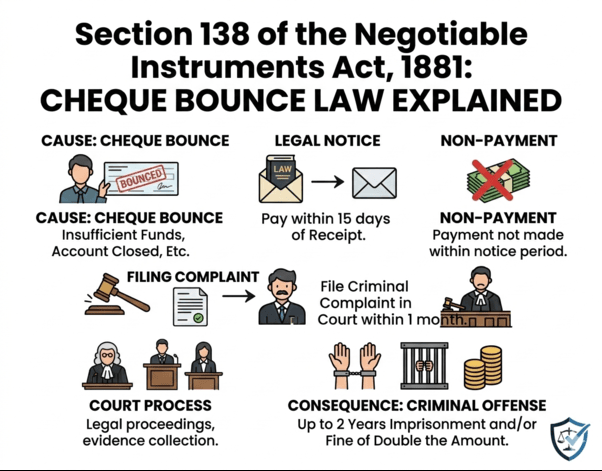
- Legal notice: The payee must issue a written notice to the drawer within 30 days of dishonour.
- Failure to pay within 15 days: If the drawer does not make payment within 15 days of receiving notice, prosecution can be initiated.
Punishment Under Section 138
The offence is criminal in nature. Punishment includes:
- Imprisonment: Up to 2 years.
- Fine: Up to twice the cheque amount.
- Both imprisonment and fine: Depending on the severity of the case.
Landmark Judgments
Indian courts have clarified and strengthened Section 138 through landmark rulings. For example:
- Courts have held that payment before filing of complaint discharges liability.
- Digital notices (via email or WhatsApp) are now recognized as valid legal notices.
Why Section 138 Matters
- Protects trust in financial transactions
- Deters misuse of cheques
- Strengthens the banking system
- Provides speedy remedy to aggrieved parties
FAQs on Section 138
Q1. Is cheque bounce a civil or criminal offence?
It is a criminal offence under Section 138.
Q2. Can a company be prosecuted under Section 138?
Yes, companies can be held liable, and responsible officers may also face prosecution.
Q3. What if the drawer pays after receiving notice?
If payment is made within 15 days, prosecution cannot proceed.
Conclusion
Section 138 of the Negotiable Instruments Act is a cornerstone of India’s cheque bounce law. It ensures that cheques remain a reliable instrument of payment, instilling trust and discipline in financial transactions. For businesses and individuals alike, understanding this provision is crucial to avoid legal pitfalls and maintain credibility.